

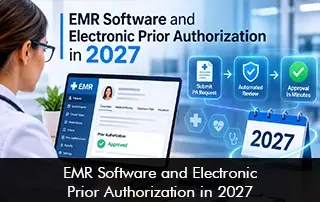
Connected and automated workflows in EMR software are enhancing the electronic prior authorization process. Providers know that getting insurance approval is a taxing process. Staff have to check payer websites, fill out forms, and engage in follow-up to see if their requests have been approved.
Fortunately, in 2027, we can expect this process to be streamlined with better integration. The new federal requirements are pushing EHR software vendors and health insurers toward standardized electronic prior authorization. This can support smoother exchange of information with payers from the existing EMR system.
Why Electronic Prior Authorization Matters in 2027?
The Centers for Medicare and Medicaid Services (CMS) has rolled out a new rule, named CMS-0057-F. The new rule aims to make the entire approval process faster and simpler. This is great news for the healthcare sector. Currently, when providers have to order tests or a certain procedure, they need to contact the patient’s insurance company for approval. The process is time-consuming, as staff have to fill out forms manually and even send records through fax of different systems.
From January 1st, 2027, due to CMS-0057-F, insurance companies have to use APIs that will connect directly with healthcare software like electronic medical records software. This means that doctors can now request insurance approval from their compatible EMR systems without having to engage in manual work.
The CMS has estimated that the process of prior authorization requests consumes both time and money. It takes about 13 hours every week to handle prior authorization tasks by the hospital staff. Astonishingly, $34,000 is the cost incurred for processing these requests for every provider. CMS is taking a strong initiative to make insurance approvals more digital and connected in 2027. This can mean simplified workflows and ultimately lower costs.
What are EMR software vendors doing?
Prominent EMR software vendors are taking drastic measures to make the electronic prior authorization process more practical before the 2027 deadline.
Epic EHR Software
Epic Systems is bringing prior authorization checks into clinical workflows. For this, the vendor has been working closely with health systems and insurance companies. So when a clinician places an order or prepares for a certain procedure. The Epic EMR software can automatically check if insurance approval is required. In its February 2026 software version, Epic also released the Prior Authorization API capability. This functionality provides robust tools that can connect payer and provider systems easily.
athenaOne EMR Software and other software vendors
CMS has named electronic medical record software vendors such as athenaOne EMR software, MEDITCEH, and Oracle Health as early convertors to initiate Electronic Prior Authorization Acceleration. This highlights that the above EHR software vendors are working towards interoperability. This can help different systems, insurers, and healthcare networks to communicate more easily.
The Future of Prior Authorization in EMR Software
The future of prior authorization seems bright with the steps taken by the CMS. With EHR software vendors and insurance companies on board, healthcare is moving towards a connected approach when it comes to the prior authorization process.
The catch here is that technology alone cannot eliminate insurance-related delays. In the end, it is about better integrations with EMR software and payer systems to make the process less complicated.