
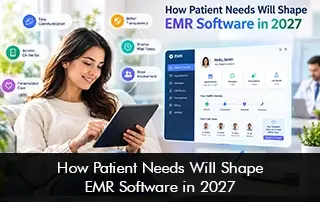
Over the years, healthcare has evolved. It is not only about the provider but also about patients. Patients nowadays want more control throughout their care journey—they want to feel connected and involved. As patient needs grow, this will reshape EMR software, making it more patient-centered and accessible. Patients want access to their medical information, to communicate with their provider, to book appointments, and to pay easily through convenient online payment options. These expectations put more responsibility on EHR software vendors in 2027.
Easier Access to Healthcare Information
Patients want easy access to health records. They don’t want to call the clinic and wait to get the information they want. Whether it is receiving lab results or reviewing medication summaries, swift access is becoming a basic patient demand.
This is where patient portal platforms in electronic medical records software are gaining popularity. According to athenahealth’s patient engagement research, it was revealed that 73% of patients preferred receiving test results online and 67% wanted to schedule appointments online. These percentages reflect that a greater number of patients want convenience through digital solutions.
Responding to these demands, NextGen Healthcare EMR software offers its NextGen patient portal. Via the portal, patients can easily view lab results, access health records, pay online, and request prescription refills. In 2027, patient engagement solutions will become more user-friendly, providing a window of opportunity for patients to stay involved in their care.
Personalized and Connected Care with EMR Software
It is a reality that no patient wants to repeat their medical history when they visit a new provider. They expect the doctor to have access to their health information for efficient care. This makes EHR software interoperability even more crucial than ever. Improved data exchanges between hospitals, labs, pharmacies, and specialists can reduce care gaps and lead to care coordination.
In 2027, EMR software vendors will continue to invest in connected systems so patient information can be easily accessible. Also, remote patient monitoring tools will become important for patients with chronic conditions.
Better Communications and Scheduling for Patients
Patients want ease when it comes to communication and booking appointments. Calling the clinic and waiting is a thing of the past. Electronic medical records software vendors now offer AI-powered communication tools, online scheduling, and automated reminder functionality.
AI is a game changer when it comes to efficient patient communication. The athenaOne EMR software has released AI-powered patient communication tools. These AI agents can help answer routine questions and even provide assistance with online booking. Looking ahead, we can predict that AI can make interactions more individualized and help reduce any communication gaps by answering queries then and there.
What Lies Ahead of EMR Software?
In 2027, a successful EMR software will be one that serves not only the needs of the clinician but also focuses on the patients. There needs to be intuitive and flexible patient engagement solutions that can make patient interactions more meaningful. The next generation of healthcare technology will support faster communication and more personalized care.