
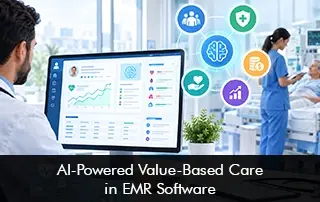
With a value-based care model, clinicians measure success differently. The value-based care model concentrates on enhanced patient outcomes and services. To support the healthcare model, EMR software plays a vital role. Earlier, EHR systems were seen as digital storage cabinets, but now their role has evolved. Software technology is being utilized by clinicians to improve decision-making, to have quick access to patient data, and to close any gaps in care. All these robust functionalities put emphasis on the value-based care model.
Over time, the integration of AI tools in EMR software is taking the spotlight. With AI in software solutions, healthcare organizations can make value-based care more proactive and clinically driven. Providers can ensure early intervention and pave the way for successful care management.
How has AI Revolutionized Value-Based Care?
Value-based care involves a massive amount of patient data from multiple sources. This data includes a patient’s medical history, lab results, medications, diagnoses, and financial and insurance details. Reviewing this data manually can be time-consuming and inefficient. AI capabilities in electronic medical records software are a great relief for providers. AI can analyze large amounts of data and surface the most relevant details that are needed to deliver high-quality patient care.
Healthcare providers can support value-based care with AI in the EHR system. AI can quickly identify gaps in care that might otherwise be missed. This means automatic alerts about pending preventive screenings and follow-up visits. Moreover, clinicians can also use AI to analyze patient data to prioritize high-risk patients. Once providers know these patients, they can monitor them closely and intervene to boost health outcomes.
AI not only leads to clinical benefits but can also empower hospitals to reduce healthcare costs. Early intervention, better care coordination, and more targeted care can help hospitals utilize resources more efficiently. This can help reduce unnecessary costs associated with duplicate testing and readmissions.
EMR Software Vendors Offering AI for Value-Based Care
athenahealth EMR Software
The cloud-based platform of athenaOne EHR software is the clearest example of solutions that support value-based care. The all-in-one platform combines revenue cycle management, EHR, patient engagement, and analytics. In September 2026, the vendor announced new AI capabilities released especially for value-based care. The AI functionalities can help practices with risk adjustment, quality performance, and cost savings. Furthermore, the AI tools in the athenaOne platform can help identify patient populations and trends. This data can support organizations with new opportunities to enhance health outcomes.
Oracle Health Software
Oracle Health EMR software is another vendor that is taking practical steps to offer users AI capabilities for value-based care. For example, Oracle Health Quality Management leverages AI to empower healthcare organizations to identify patients who need attention and quick treatment. It brings together care insights, patient outreach, and risk contract management functionalities to meet value-based care goals.
The Future of EMR Software
AI integrations in EMR systems are no longer a thing of the future. Fortunately, it is happening to help care teams and healthcare at large. The greatest shift we will witness is that care will become more proactive rather than reactive. AI is designed to analyze large amounts of data, and this clinical data is gold to support the providers’ decision-making process. With AI taking center stage, clinicians can focus on care quality and better outcomes.