
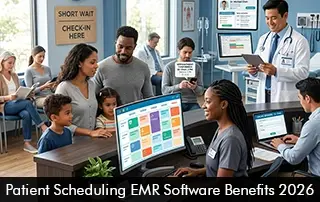
Hospitals and clinics have always found managing patient appointments a challenging task, which can even lead to increased administrative burden. Over time, smart patient scheduling software integration in EHR Software has empowered practices to benefit from AI-propelled workflows that can impact revenue generation and even patient satisfaction scores. In the US clinics are facing high patient volumes, staff shortages, and a swift demand for healthcare services—this makes patient scheduling EMR Software even more critical than before.
Why Patient Scheduling Matters in 2026
Ineffective patient scheduling remains a grave pain point, adding to financial and administrative burdens. Studies in the BMC Health Research show that missed appointments can cost the US healthcare system around $150 billion yearly. For every patient no-show, a provider may lose $200 in revenue.
Key Advantages of Using a Patient Scheduling EMR Software in 2026
Modern Electronic Medical Records (EMR) Software systems offer patient scheduling solutions that are convenient and efficient. With robust patient scheduling software practices, this year can reduce patient no-show rates with AI automation. AI works like magic to predict and therefore prevent missed appointments. Automatic reminders are sent to patients in the form of emails, text messages, and voice channels to ensure patients show up for their scheduled appointment.
Patients of today want ease, and this is true for appointment booking as well. Nobody wants to spend hours calling the clinic and waiting to find the next available slot. This method is inefficient and used back in the day. A patient scheduling EHR system can act as a 24/7 scheduling software that can empower patients to book appointments online at any time. Patients can also see real-time availability and can even reschedule appointments quickly. This facility has helped reduce phone call volumes by 60%, freeing up front desk staff members to allocate their time to other tasks.
Good patient scheduling EMR Software provides dynamic waitlist automation. When a patient cancels their appointment, this system helps practices identify available slots and even notify other patients so schedules are optimized and revenues are not lost.
Patient scheduling software solutions, like Tebra EHR Software, can also streamline the patient intake process. It provides digital forms that patients can complete before their visit. This facility comes in handy to save staff time, reduce errors, and also enhance patient experiences.
Innovative Tools Transforming Patient Scheduling EMR Software in 2026
AI-Predictive Scheduling
AI predictive scheduling tools are integrated in the patient scheduling platform to forecast no-shows and even adjust schedules. For example, Epic Systems uses predictive analytics to alleviate the issue of no-shows and optimize appointment flow.
Conversational AI Assistants
Chatbots are revolutionizing healthcare in many ways, and they have made their way into patient bookings. Patients can easily book and reschedule appointments with conversational AI assistants
Real-Time Automation Engines
Patient scheduling EMR software has evolved for the better; now these robust solutions can even rebook when slots are cancelled via historical data patterns.
Patient Scheduling: More than a Booking Software in 2026
In 2026, patient scheduling software goes way beyond just scheduling appointments. It is a complete solution that is designed to smartly automate operational processes, improving the financial health of practices and keeping patients satisfied. In 2026, your patient scheduling EMR system should be integrated and not isolated and should be predictive.